While the escalating conflict between the United States and Iran is a humanitarian crisis, the economic “ripple effect” on the UK energy market has been a wake-up call for British industry. Following the February 2026 strikes and the subsequent closure of the Strait of Hormuz, geopolitical instability in the Middle East directly correlates to UK wholesale gas price volatility. This impacts everything from manufacturing overheads to commercial heating costs.
Iran sits at the centre of the most important energy region in the world. This region of the Middle East controls a significant share of global oil and natural gas resources: 20% of the world’s liquefied natural gas (LNG) normally passes through the Strait of Hormuz. The current blockade has created a massive “risk premium” on the National Balancing Point (NBP) – the UK’s gas price benchmark.
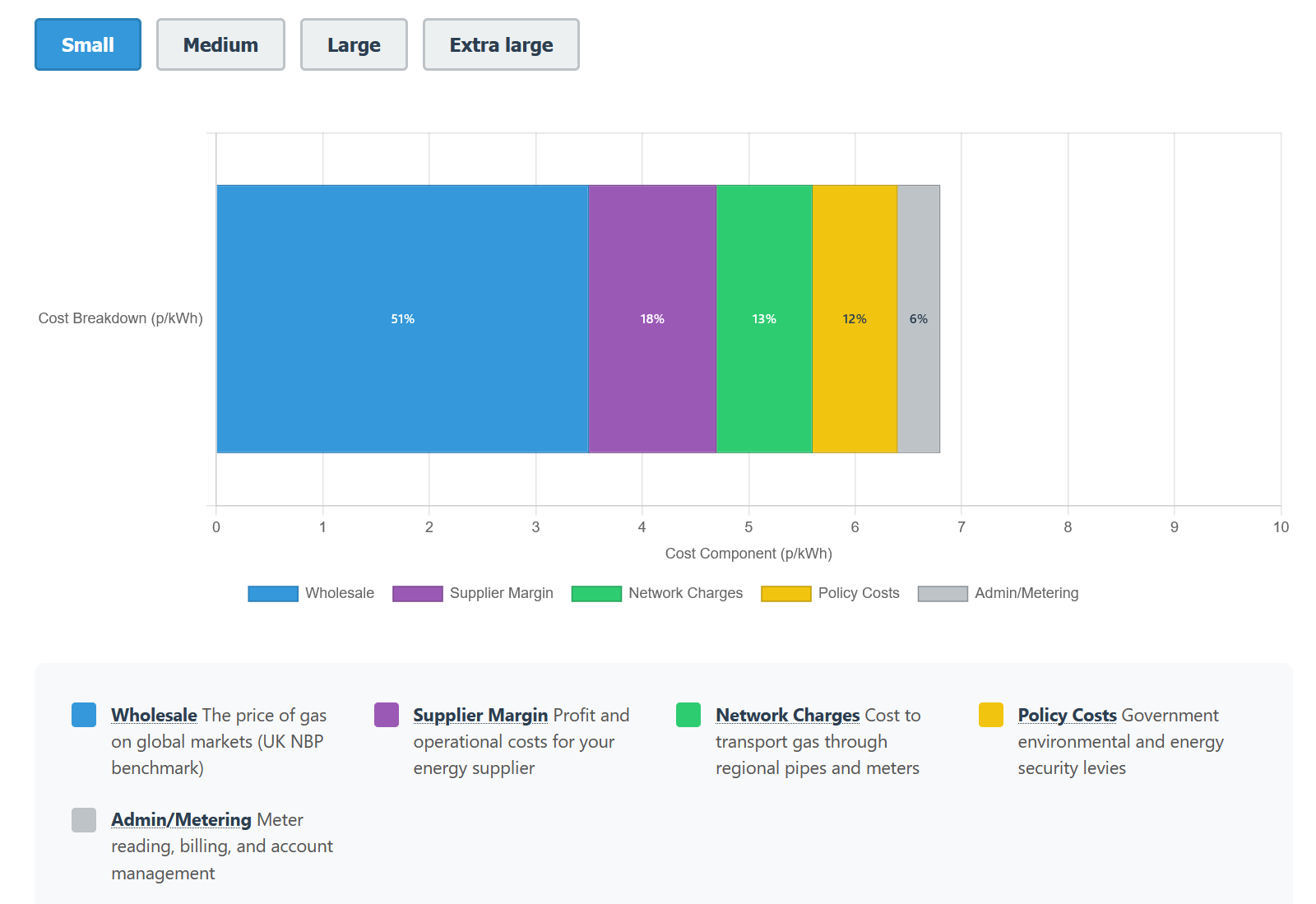
This has led to wholesale volatility: between February 28th and late March 2026, UK wholesale gas prices rose by nearly 75%. It has also affected LNG deliveries, due to rising maritime insurance costs and the threat of drone attacks, despite the April conditional ceasefire.
For businesses in the UK relying on gas for heating, drying, manufacturing processes, or electricity generation, these changes in the wholesale gas market translate directly into higher operating costs.
For energy-intensive businesses, the goal for 2026 will now be decoupling. As long as your business relies on the National Grid, your operational costs are at the mercy of global events thousands of miles away.
Many of the affected UK businesses are those that could most benefit from the biomass heating systems offered by Ranheat – if they aren’t already. These include:
Rising energy costs can mean that production costs also rise, margins can shrink, competition with other businesses can shift, and long-term planning can become more complicated.
Projected Impact on Annual Industrial Gas Bills (2026 estimates)
A business currently spending £40,000 per year on gas could see that rise significantly if wholesale prices remain elevated.
For example:
| Current annual gas bill | Possible increase | New annual cost |
|---|---|---|
| £40,000 | +35% | £54,000 |
| £100,000 | +35% | £135,000 |
| £250,000 | +35% | £337,500 |
The exact figure depends on contract timing and supplier arrangements, but the direction of travel is clear.
When wholesale gas rises quickly, business energy costs often follow.
All this means that the types of businesses listed above, as well as many others, will be looking for more efficient, cost-effective, alternative energy sources for their factories and offices.
This is where Ranheat comes in.
Why Choose Ranheat Wood Waste Systems in a Volatile Market?
At Ranheat, we design, install, and manufacture an extensive range of wood waste heaters and industrial biomass boilers. While gas prices are tied to global conflict, wood waste remains a localized, stable fuel source. It cannot be blockaded or sanctioned.
Energy cost reduction is a perpetual concern for businesses looking for long-term factory heating solutions. Transitioning to an industrial biomass boiler allows manufacturers to utilize their own waste streams, such as joinery waste, effectively decoupling their operational costs from the NBP gas benchmark. This creates energy independence and fuel security for UK businesses and removes a huge weight of worry, as well as significant financial savings.
Our MSU-range (Hot Water) and WA-range (Warm Air) systems are designed specifically for industrial environments. With an MSU system typically costing between £40k–£250k, the ROI has never been faster than in the current 2026 energy climate.
RanheatIO Remote Monitoring: In an era of high operational pressure, our remote monitoring ensures your system runs at peak efficiency without constant manual oversight.
Navigating Compliance and Permitting in 2026
With the UK’s commitment to Net Zero and new 2026 emissions standards, choosing a compliant system is vital. A Ranheat boiler isn’t just a hedge against gas prices; it’s a future-proof asset that meets all Clean Air Act and MCPD (Medium Combustion Plant Directive) requirements. Read more in our guide to compliance and permitting.
No one can predict when the Strait of Hormuz will fully reopen or when global energy markets will stabilize. The only variable you can control is your own energy infrastructure.
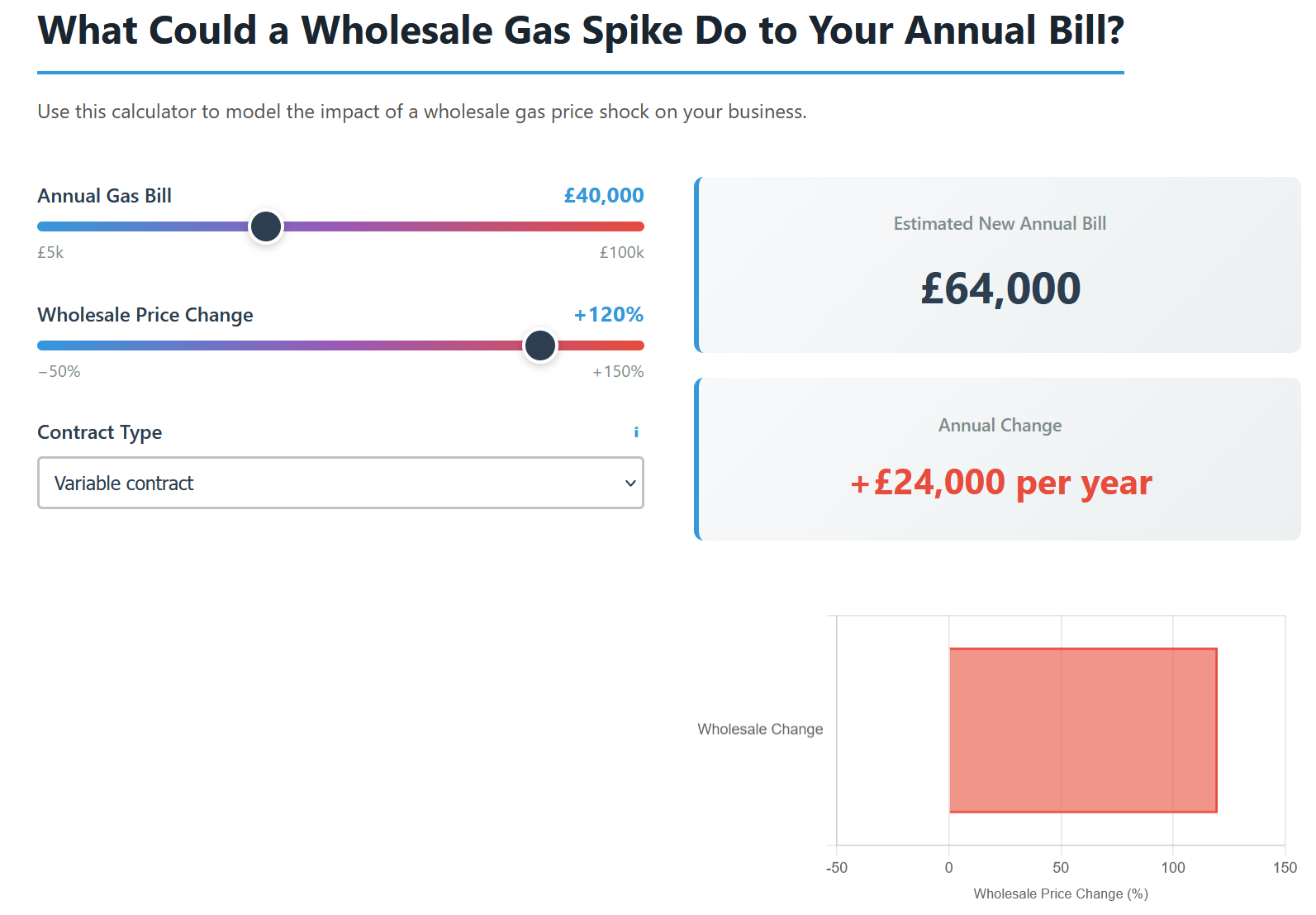
To help explain how wholesale gas prices affect real business energy bills, we built a simple interactive tool: our industrial biomass energy calculator.
It shows:
The goal is simply to help businesses understand the mechanics behind the numbers they see on their energy contracts.
At Ranheat we have over 30 years of experience and knowledge in wood waste heating and boiler systems. We have a wide range of products that can work for a range of businesses and factory settings. Learn more about how biomass heating works.
You can also contact us with any other enquiries and questions you may have about our products and solutions.

